


It’s sitting on my shelf right now, watching me, taunting me (full disclosure: I’m not actually at home right now, but I can still fill it calling to me though the airwaves of the soul). Against the Day, by Thomas Pynchon, is by all accounts a monster of a novel. The first edition hit the shelves at 1085 pages. The audio book version was 54 hours long. Yes, someone seriously sat there in front of the microphone for well over 54 hours, just reading.
This got me thinking. I love a book that keeps me enthralled for countless hours – one that I can spend days or weeks buried in. You’re caught up in the world, the characters, the story, and everything is so addicting that the last thing you want is for the book to end. My first Thomas Pynchon novel, V., was dense with disparate stories that came together and featured characters that shouldn’t have anything to do with each other.
World War Z: An Oral History of the Zombie War, by Max Berry, was also so perfect that I never wanted it to end (of course, my obsession with zeds probably had a thing or two to do with that).
Still, not every biblical length novel is what you would call good. There are many examples of novels that are so long simply because the author had, as someone once said about Stephen King, “diarrhea of the typewriter.” Sometimes the author can’t end the novel, sometimes they have the compulsion to write, and write, and write, until they have literally millions of words that not even the best editor in literature can trim down.
To note, I’m not talking about series’. I’m looking for singular works, the big daddies of literature. Sure, some of these could have been published in volumes, but instead exist as a semi-coherent whole. So, while Stephen King’s The Dark Tower may be nearly 4,500 pages in total, it couldn’t be counted as a single entity. Yeah, I know, there’s a lot of leeway here in what defines a single piece of literary work, but this is the easiest way to go about things.
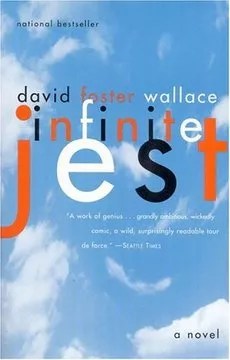
Infinite Jest, by David Foster Wallace. In what would ultimately prove to be Wallace’s opus, Infinite Jest is a daunting work of art at 1104 pages. Futuristic, postmodern, colossal and full of biting satire, Infinite Jest is at times the story of a piece of film that gives the book its title. With copious footnotes that break up and reinforce the narrative, and high and low brow hanging in the very same sentence, this novel alone will keep Wallace’s legacy alive for many life times.
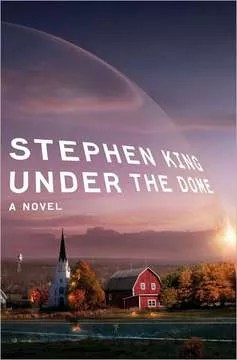
Under the Dome, by Stephen King. Just a hair shorter than the expanded edition of The Stand, Under the Dome will prove to be King’s longest single novel in quite some time at 1088 pages. Based on a 450 page abandoned novel from the 1980’s, Under the Dome returns to King’s home turf, Maine. The town of Chester’s Mill finds itself enclosed under an invisible dome, with families divided and cars exploding as they try to leave. Not out until November 10th, Under the Dome has already gotten advanced praise from Sci-Fi author Dan Simmons, who calls it “huge, generous, sprawling, infinitely energetic […], absolutely enjoyable and impressive.”
Marienbad My Love, by Mark Leach. Perhaps more an example of King’s “diarrhea of the typewriter” than anything else, Marienbad My Love is available for free from Leach’s website. At 17 million words long, Leach claims his work contains both the world’s longest word (at 4.4 million letters) and the world’s longest sentence (3 million words). The plot of the novel centers on a journalist-turned-filmmaker who is obsessed with God, and has hopes to create a science-fiction version of the 1960’s French film, Last Year at Marienbad, in order to fulfill the will of God. If you have the time or inclination, give it a go.
Breeze Avenue, by Richard Grossman. Similar to Marienbad My Love, Breeze Avenue is an experiment work by an unrecognized literary master. The unabridged version will be more than three million pages, and will be, as Grossman describes it, a “streaming poem … existing primarily as a massive form in cyberspace that disgorges narrative, music, architecture, art, dance, philosophy, religious and political thought, and many forms of verse.” Keep an eye out for it, and check out a 70 page sentence from his novel The Book of Lazarus here.
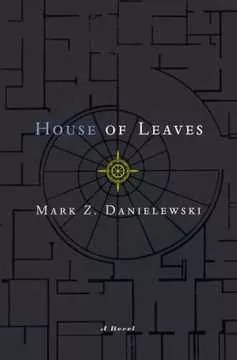
House of Leaves by Mark Z. Danielewski. A cult novel of pure experiment, House of Leaves is the shortest of the novels listed here (at 709 pages), but is almost as dense as any of them. Consisting of two narratives, House of Leaves tells the story of a fictional story of the house, the story of the man writing the story, and that of the man reading the story. House of Leaves haunts, confuses and surprises.
See also: Ulysses and Finnegans Wake, by James Joyce; Don Quixote, by Miguel de Cervantes; Blood Meridian by Cormac McCarthy; Omensetter’s Luck and The Tunnel by William Gass; And works by authors Fyodor Dostoevsky and John Barth.
This article appears in Oct 13-20, 2009.


Is “Blood Meridian” really all that long? I mean, the copy I have is only like 300 pages or so. “Suttree,” if I remember correctly, is the McCarthy biggie, with it’s 500+ page length and Bible-sized font.
Other immersion books to consider, however, that are all very good to pretty good:
“2666,” by Roberto Bolano; “Tree of Smoke,” by Denis Johnson; “The Recognitions,” by William Gaddis; “Terra Nostra,” by Carlos Fuentes; “Little, Big,” by John Crowley; “Underworld,” by Don DeLillo (though “Libra” is better, albeit somewhat shorter); “Mason & Dixon,” by Thomas Pynchon (which may be the best thing he’s ever written); “Warlock,” by Oakley Hall; “Imajica,” by Clive Barker; and “Ada, or Ardor,” by Vladimir Nabokov.
That’s a very man-centric list of authors but I can’t think of any great modern bohemeths by women (or else “Middlemarch” would be RIGHT THERE); the closest is the nearly 400-paged “Geek Love” by Katherine Dunn, or any entry in the latter Harry Potter series by J.K. Rowling, whose books I do enjoy. I haven’t read A. S. Byatt’s “The Children’s Book” but I hear that’s a tome.
Matt,
Blood Meridian isn’t that long of a read, I just included it in the list because it’s so dense, like a lot of his. Those you listed are all brilliant suggestions, and this list is by no means definitive. And, yeah, nothing by women, but that was not by design. I apologize that. Thanks for the suggestions. I’ve been wanting to get 2666 for such a long time, just haven’t had the money for it, but soon, soon, same with Mason and Dixon, Underworld, Gaddis, all those.
Thanks, and much respect
Chris
There is a growing writing community on the web that is working in the vein of Max Brooks and his contemporaries at http://www.talesofworldwarz.com – some good, some great, and a few awful stories for fans of zombie apocalypse fiction. So instead of bible-length tomes you can sink into some bite-sized web fiction.
I’ll have to check that out, Ryan. I’ve been on a zombie spree with my writing. Thinking I have three stories coming out in anthologies next year, one more at an online journal, and one will be in my book coming out next year. Thanks for the link.