


In seven weeks touring with his new book, Between the World and Me, critically acclaimed journalist and best-selling author Ta-Nehisi Coates said he has yet to see a crowd as big as the one that attended his lecture at Davidson College last night.
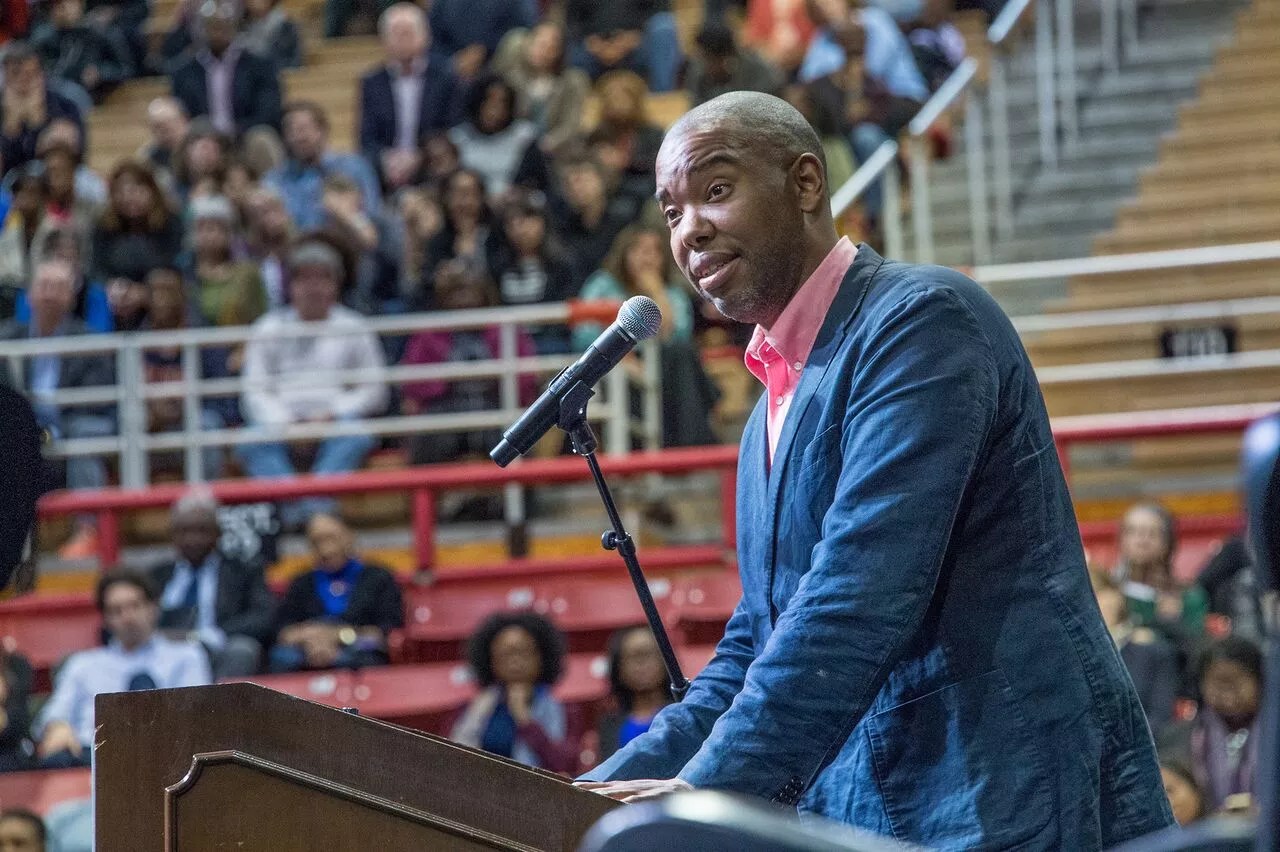
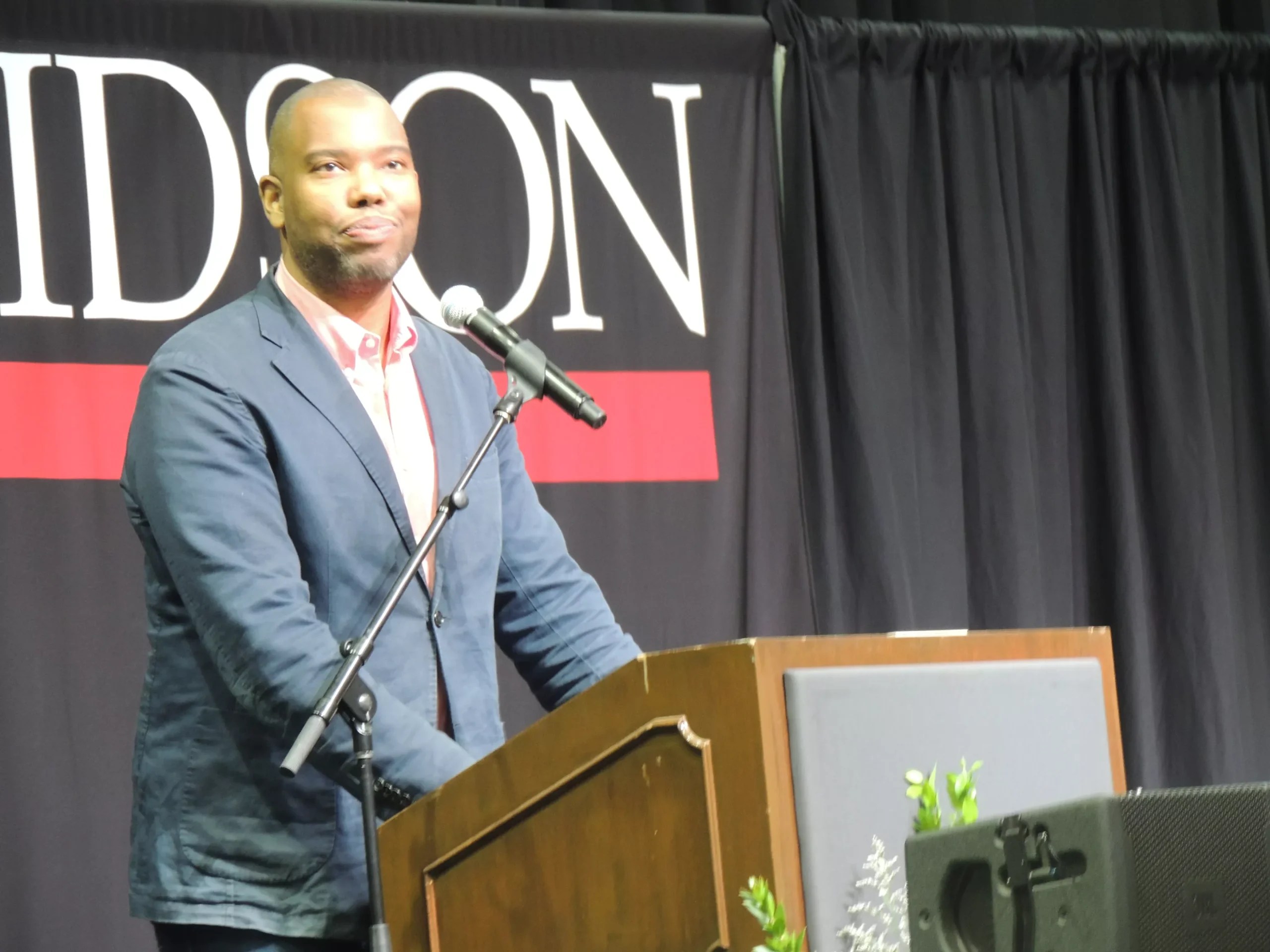
Organizers distributed 4,000 tickets to see the 2015 MacArthur Fellow speak on issues including what inspired him to write the new book, the death of his friend Prince Jones at the hands of police in 2000 and broader issues like the criminalization of black bodies.
“It’s easy, as a writer, to tell stories that confirm what is already known,” said Davidson College President Carol Quillen while introducing Coates to the crowd. “It’s much harder to see through familiar narratives to stories untold; stories that are hidden, occluded, rendered unspeakable by what is taken for granted. TNC is such a rare writer.”
Coates began his speech by describing how attending Howard University, experiencing the birth of his son and then learning of Jones’ death due to a case of mistaken identity by police in Maryland’s Prince George’s County (where shooting people was “just what the police there did”) has formed his outlook over the past two decades.
He then spoke about some of the bigger challenges facing black people in America. The following are excerpts from his speech:
On post-Jim Crow segragation
“My experience was the kind of neighborhood violence that you encounter when you live in segregated black communities, which is to say black communities in this country because virtually all of them are segregated. Black people are the most segregated ethnic group in terms of our cities in this country, and its been that way for the past 100 years or so.
“Things happen when you’re segregated. Which is not to say that you’re merely cut off form white people, it doesn’t mean that you just live next to black people. It means that you live somewhere that receives less services despite paying the same type of tax money, (with other people) that have historically been discriminated against.”
On how he viewed police violence following Prince Jones’ death
“I understood that type of violence, but I didn’t really understand police violence on that level and I think the horrifying thing for me was the fact that…you know it’s one thing to deal with the violence of criminals, but it’s another thing to deal with violence of the state, which is a totally different thing…
“The violence of another citizen, the violence of a quote-nquote criminal, is something that we’re all familiar with. There are all sorts of ways that that can be dealth with. But the police have been empowered by the state to deal out lethal violence; it’s very, very different. When I was in west Baltimore and I was getting jumped those people were not acting on behalf of the city of Baltimore. What people propose to do now is to lower the standard of police to the standard of criminals. But see when you have the power to kill on the behalf of the state, you should have a higher standard.”
“You’ll get people, they do it all the time over the course of the Black Lives Matter protests, they say, ‘Well, yes, but what about Black on Black crime?’ Which is fine. I have no problem talking about the violence in our communities because that violence happens because of political choices made by this country.
“Whenever someone says, ‘Well, why are black neighborhoods so violent?’ you need to ask why black neighborhoods look that way in the first place. Is that natural, what is that? In fact, what you’ll find is that there have been a record of policies that have made it that way. When you deprive people of resources I don’t know what people expect the response to be. It seems pretty natural in that situation.”
On how heritage affects today’s black communities
“We had a Civil War and a lot of Americans died. Four million black folks eventually gained their liberty or some quasi form of liberty, but see, heritage matters. Things don’t just leave because you think you want them to leave, especially during that period of time when you don’t necessarily want them to leave. One thing that did not leave is the presumption of black criminality.
“We followed the Civil War with basically a 100-year domestic terrorism campaign directed at black people. When you see all the talk about terrorism today – and this is not a defense of it but quite the opposite – understand that that type of terrorism is not exactly new to us. We did it to African American communities for hundreds of years. When you attempt to burn somebody’s store down when you kill people in a neighborhood with the hopes of influencing politics, that’s what terrorism is, and that was the norm for black people in this country. It wasn’t simply by asking black people not to vote, that black folks in the South were disenfranchised. No, they were disenfranchised at the barrel of a rifle.”
This article appears in Nov 11-17, 2015.