


(View From The Couch is a weekly column that reviews what’s new on Blu-ray, DVD and Streaming. Ratings are on a four-star scale.)
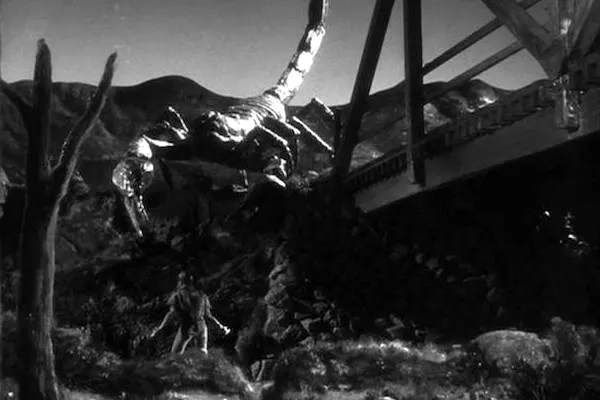
THE BLACK SCORPION (1957). Every once in a while, a movie would end up on Mystery Science Theater 3000 that didn’t quite deserve the destruction thrust upon it by the Satellite of Love crew. Some good, some pretty good, and some average, such titles certainly didn’t deserve to be lumped in with such cinematic atrocities as, say, Manos: The Hands of Fate or The Creeping Terror. Along with the likes of Gorgo, Marooned and Squirm, I would have to add The Black Scorpion, which, on the scale of “giant creature” movies from the 1950s, isn’t on par with such gems as Them! and Tarantula but is a far better bet than The Giant Claw. The Black Scorpion has been released via the Warner Archive Collection, and away from the MST3K ribbing, it’s an entertaining and fast-moving yarn in which an earthquake unleashes gigantic, prehistoric scorpions that swarm over the Mexican terrain. The special effects run hot-and-cold, as the impressive monsters seen in long-shot – created by Oscar-winning effects pioneer Willis O’Brien (King Kong, Mighty Joe Young) and Pete Peterson — are compromised by unfortunate close-ups that render the creatures ridiculous rather than riveting.
Blu-ray extras include an interview with visual effects legend Ray Harryhausen as he discusses his mentor, Willis O’Brien; the dinosaur sequence from Irwin Allen’s 1956 production The Animal World, with stop-motion work by Harryhausen and supervision by O’Brien; and test footage by Peterson (discovered after his death) of “The Las Vegas Monster” and “The Beetlemen,” created for a pair of unfilmed projects.
Movie: **1/2
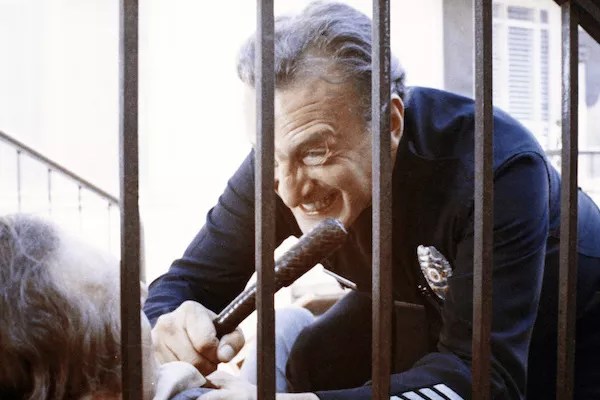
THE NEW CENTURIONS (1972) / THE SEVEN-UPS (1973). A commercial hit and an Oscar winner for Best Picture, 1971’s The French Connection largely introduced the raw, gritty and cynical template that would be showcased in the majority of that decade’s cop flicks. Here are two similar efforts in that rough’n’tumble vein, both newly released on Blu-ray by the Twilight Time label.
While The French Connection was burning up theaters, real-life cop Joseph Wambaugh’s debut novel The New Centurions was setting the bestseller list on fire. The film version was released the very next year, and while it changed many of the particulars of its source, it retained its loosely structured look at the lives of various cops working for the LAPD. Top-billed George C. Scott is excellent as the veteran policeman who imparts his philosophies on his rookie partner, although it’s Stacey Keach, as said partner, who essays the largest role. Scott Wilson and Erik Estrada portray fellow greenhorns on the force, and the movie examines the challenges they face on the streets and how these invariably affect their mental and emotional stability as well as their personal affairs. The vignettes alternate between drama and comedy, and the movie inspired such TV hits as Police Story (co-created by Wambaugh) and Hill Street Blues. Isabel Sanford, already playing Louise Jefferson on All in the Family, appears as a jovial lady of the night, while another television mainstay, Roger E. Mosley (TC on Magnum, P.I.), turns up briefly as a truck driver.
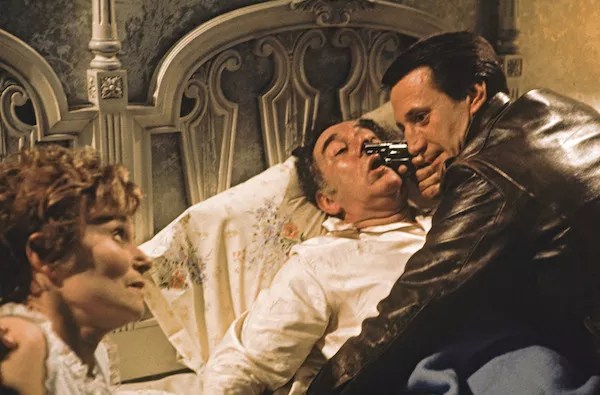
The Seven-Ups sports a more direct connection to The French Connection in that it’s directed by that picture’s producer, Philip D’Antoni. D’Antoni also oversaw the 1968 Steve McQueen classic Bullitt, so it’s no coincidence that all three films contain what are rightly considered three of the best car chases ever filmed. The French Connection second banana Roy Scheider here takes center stage, portraying the leader of an elite team of ace NYPD detectives who specifically set their sights on big-time criminals. Here, the outfit gets involved in a skirmish between the Mob and a gang of thugs who kidnap gangsters with the expectation of receiving sizable ransom sums. Scheider is suitably intense, and if his colleague Ansel looks familiar, that’s because he’s played by Ken Kercheval, five years before he began his lengthy run as J.R. Ewing antagonist Cliff Barnes on TV’s Dallas.
Blu-ray extras on The New Centurions consist of audio commentary by Wilson and film historian Nick Redman; separate audio commentary by film historians Lee Pfeiffer and Paul Scrabo; the theatrical trailer; and an isolated track of Quincy Jones’s score. Blu-ray extras on The Seven-Ups include audio commentary by film historian Richard Harland Smith; a vintage behind-the-scenes featurette; an introduction by D’Antoni; interviews with D’Antoni, co-star Tony Lo Bianco, and technical adviser (and former NYPD detective) Randy Jurgensen; a piece on the car chase sequence; and an isolated track not only of Don Ellis’s score but also the unused score by Johnny Mandel.
Both Movies: ***
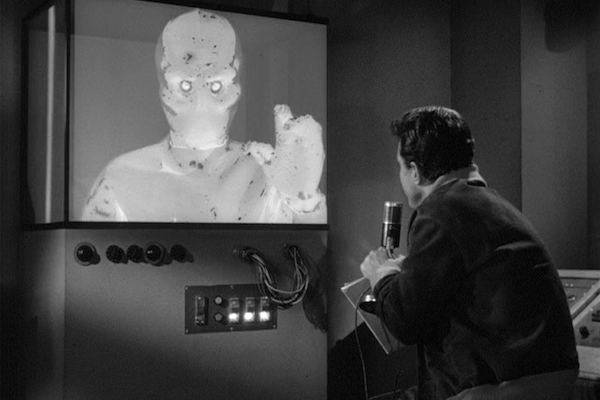
THE OUTER LIMITS: SEASON ONE (1963-1964). The fact that it only lasted two seasons doesn’t negate the importance, influence or enduring popularity of this crackerjack anthology series that originally aired on ABC. Opening with one of the most instantly recognizable voice-overs in TV history (“There is nothing wrong with your television set. Do not attempt to adjust the picture. We are controlling transmission.”), each episode would devote an hour to a trippy fantasy yarn that often involved extra-terrestrials and usually spoke out against man’s folly (often in the areas of science and/or war). Created by Leslie Stevens and guided through its first season by producer and frequent scripter Joseph Stefano (best known for adapting Robert Bloch’s novel Psycho for Hitchcock), the series showcased early appearances by numerous rising actors (including Robert Duvall, Carroll O’Connor, Martin Sheen and Bruce Dern) and featured excellent effects that brought to life some rather unique creatures – the design of the diminutive alien convicts in the classic episode “The Zanti Misfits” should be laughable but actually proves to be quite terrifying. Other noteworthy episodes include “The Galaxy Being,” the pilot episode starring Cliff Robertson; “The Man Who Was Never Born,” featuring a strong turn by Martin Landau as a misshapen visitor from Earth’s future; and the underrated “The Hundred Days of the Dragon,” a political thriller that would have worked as a theatrical feature.
Blu-ray extras in Kino’s new box set consist of audio commentaries on 23 of the 32 episodes by various film and television scholars. The set also includes a terrific 40-page booklet featuring an episode guide and an essay by David J. Schow (The Outer Limits Companion).
Season: ***1/2

SEASON OF THE WITCH (1972) / THE CRAZIES (1973). George Romero’s name has become so synonymous with zombies that it’s sometimes easy to forget he actually made other types of movies. Here are two such examples.
Season of the Witch first made the rounds under the titles Jack’s Wife and Hungry Wives, and either is a better representation of the film’s content than Season of the Witch. The witchcraft angle is such a supporting ingredient in the overall story that it quickly takes a back seat to the numerous other themes on display. In short, those expecting a horror film (and, given the director, who wouldn’t?) will be sorely disappointed. But those seeking something unusual will likely be fascinated by this time-capsule piece about a bored housewife (Jan White) who feels exceedingly unfulfilled as she grows older. Female empowerment, sexual repression (bookended with sexual fantasy), stifling chauvinism, generation-gap conflicts, MILF encounters, faddish pursuits, post-’60s paranoia — this film’s got a full plate, although its impact is seriously undermined by some amateurish performances and an erratic pace. And, yes, the soundtrack includes Donovan’s “Season of the Witch.”
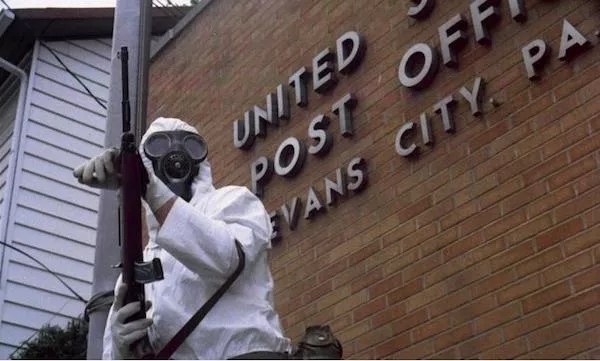
The Crazies, meanwhile, feels like a cross between Michael Crichton’s The Andromeda Strain and Romero’s own Night of the Living Dead, with plenty of the auteur’s sociopolitical observations to juice the proceedings. After a government-sanctioned virus is accidentally unleashed on a small Pennsylvania town and turns many of its inhabitants insane, the military arrives to quarantine the area and contain the threat. But it soon becomes clear that, to the unaffected humans, the incompetent, trigger-happy soldiers are as hazardous to their health as their crazed neighbors. While far from Romero’s best, The Crazies is in one way his most frightening film. Being afraid of zombies is natural, but being afraid of one’s own government should be unimaginable as well as obscene. Yet that was the case during the film’s original release — the era of Vietnam and Tricky Dick — and, with an unrepentant and morally bankrupt evildoer currently occupying the White House, that’s also the case today, lending the film an uneasy topicality. The Crazies was later re-released under the title Code Name: Trixie, and a humdrum remake emerged in 2010.
Season of the Witch originally ran 130 minutes upon its initial release as Jack’s Wife, with later versions trimmed to 90 minutes and 104 minutes. This new Blu-ray edition from Arrow showcases the 90-minute version but also contains the 104-minute extended cut (the 130-minute original has been lost). Extras include audio commentary by film critic Travis Crawford; a conversation between Romero and Guillermo del Toro; and an archival interview with White. Blu-ray extras on The Crazies include audio commentary by Crawford; behind-the-scenes footage; and an interview with co-star Lynn Lowry. Season of the Witch and The Crazies were released by Arrow this past November as part of the box set George A. Romero: Between Night and Dawn, included alongside 1971’s There’s Always Vanilla. All three films are now being offered individually by the outfit.
Both Movies: **1/2
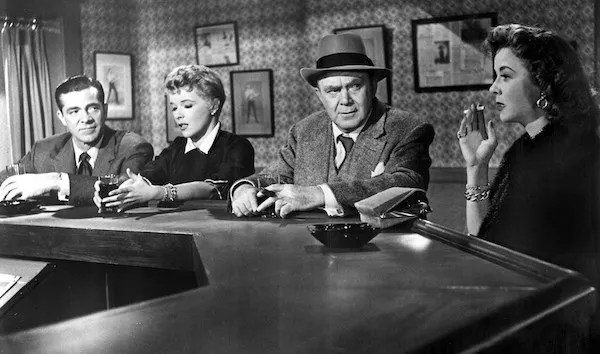
WHILE THE CITY SLEEPS (1956) / BEYOND A REASONABLE DOUBT (1956). Fleeing from Germany to escape the brutal Nazi regime, director Fritz Lang eventually ended up in Hollywood, where he worked for 21 years before finally returning to close out his career in Europe. His final two American pictures, both released in 1956, have now made it to Blu-ray courtesy of the Warner Archive Collection.
Of the pair, While the City Sleeps is the superior movie, and a few less narrative coincidences could have elevated this to the level of Lang’s noir classics The Big Heat and The Woman in the Window. As it stands, it’s still a tasty treat, with an exemplary cast punching across the story of a serial killer (John Barrymore Jr.) and the newspapermen determined to bring him to justice, usually for less-than-noble reasons. Dana Andrews headlines as star reporter Ed Mobley, thinking nothing of using his own fiancée (Sally Forrest) as bait for the murderer. Vincent Price plays the haughty new owner of the newspaper; George Sanders, Thomas Mitchell and James Craig are the three editors hoping to advance their own careers on the backs of the slayings; and Ida Lupino appears as a columnist with divided loyalties. Not surprisingly, this rousing picture from Lang and scripter Casey Robinson (working from Charles Einstein’s book The Bloody Spur) indicts morally slippery journalists almost as much as it frowns upon murderous mama’s boys.
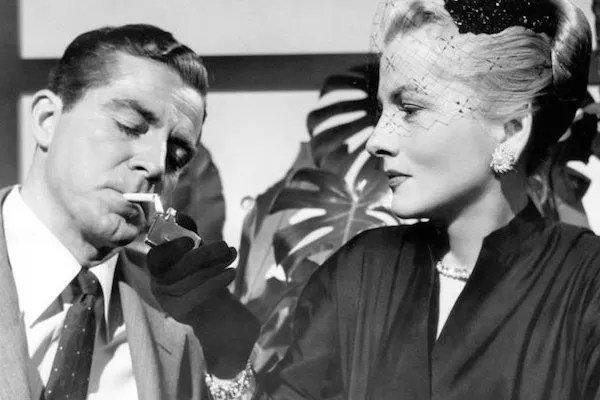
Released less than four months after While the City Sleeps, Beyond a Reasonable Doubt turned out to be a disappointing way for Lang to end his stateside career. Andrews also stars in this one – he’s cast as Tom Garrett, a writer who agrees to participate in an anti-capital punishment scheme hatched up by Austin Spencer (Sidney Blackmer), a newspaper publisher and the father of Tom’s fiancée (Joan Fontaine). With the unsolved murder of a stripper still in the news, the men will plant evidence that Tom is the killer; once he’s tried, convicted and sentenced to the electric chair, Austin will pop up to prove Tom’s innocence. Suspension of disbelief has to be stretched beyond the breaking point to accept the daft premise – or, more specifically, that the men couldn’t grasp the ways that this could go wrong – but what completely sinks the film is the twist ending, as ludicrous as it is laughable.
Blu-ray extras on both titles consist of the theatrical trailer.
While the City Sleeps: ***
Beyond a Reasonable Doubt: **
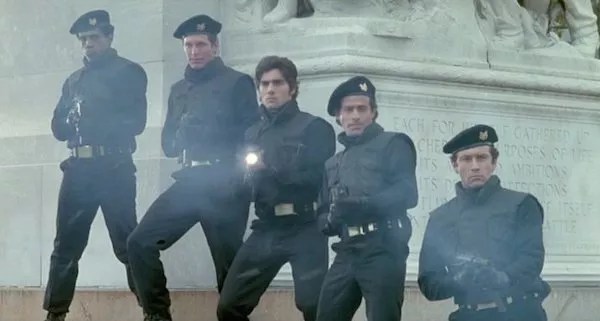
THE SOLDIER (1982). James Glickenhaus, best known for the exploitation fave The Exterminator, is behind this junky action flick in which an American operative known only as The Soldier (a monotonous Ken Wahl) battles Russian terrorists who have taken Middle Eastern oil fields hostage. Clunky writing largely kills this one, although even the hyped action scenes come off as second-rate when compared to those in other films (for instance, a ski chase pales next to the superb one from the previous year’s 007 outing For Your Eyes Only). Klaus Kinski makes a “Special Appearance” as a KGB agent, but his cameo lasts only about as long as it takes to tie one’s shoes.
Blu-ray extras consist of audio commentary by Glickenhaus; separate audio commentary by film historian Jim Hemphill; and trailers for various films available from Kino.
Movie: *1/2
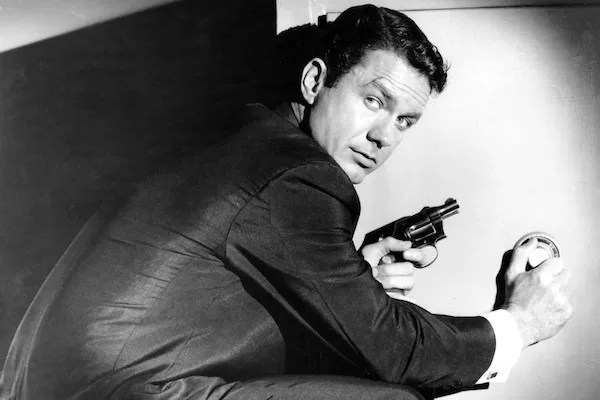
UNDERWORLD U.S.A. (1961). After street kid Tolly Devlin sees his father killed in a back alley by four hoods, he grows up determined to exact his revenge on the quartet, all of whom have become prominent mobsters. As the adult Tolly, Cliff Robertson is more rough-hewn than usual, and Richard Rust provides smooth menace as a flunky who dons sunglasses right before he plans to kill someone (including a little girl on a bicycle in one startling sequence). Samuel Fuller’s direction, in full nihilistic bloom, is better than his screenplay, which often seems impatient to get to the good stuff.
Blu-ray extras consist of a piece on Fuller; Martin Scorsese sharing his enthusiasm for Underworld U.S.A.; the theatrical trailer; and an isolated track of Harry Sukman’s score.
Movie: ***
==============================
FROM SCREEN TO STREAM
(Recommended films currently available on streaming services)
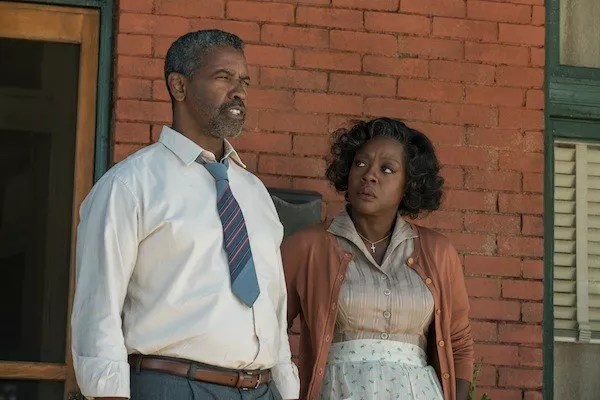
FENCES (2016). Stage-to-screen adaptations often fail to expand in ways that take advantage of cinema’s limitless potential, meaning viewers are often left with what’s little more than a filmed play. For the most part, Fences, based on August Wilson’s Pulitzer Prize-winning play, falls into that camp, with director Denzel Washington (his third time at the controls, following the solid efforts Antwone Fisher and The Great Debaters) doing very little to fill the parameters of the screen. Yet sometimes the material is simply too strong to be crippled by a lack of celluloid dazzle — that was the case with, for instance, Who’s Afraid of Virginia Woolf?, and that’s certainly the case here. Reprising their roles from the 2010 Broadway revival, Washington and Viola Davis (snagging the Best Supporting Actress Oscar) are nothing short of remarkable as Troy and Rose Maxson, living in 1950s Pittsburgh and dealing with issues involving family, infidelity and dashed dreams. Washington remains so faithful to Wilson (who passed away in 2005, at the age of 60) and his text that he even credits the screenplay solely to the playwright (a far cry from Kenneth Branagh, who absurdly earned an Oscar nomination for adapting Shakespeare’s Hamlet verbatim). Between the power of the prose and the potency of the performances, Fences easily earns its screen cred. (Amazon Prime)
Related Stories

Justice League, The Shape of Water, Star Wars: The Last Jedi among new home entertainment titles

The Age of Innocence, The Disaster Artist, I, Tonya among new home entertainment titles

Lady Bird, Thor: Ragnarok, Wonder Wheel among new home entertainment titles

The Sandlot, The Twilight People, Women in Love among new home entertainment titles

Father Figures, Molly’s Game, Up in Smoke among new home entertainment titles

The Commuter, MST3K revival, The Post among new home entertainment titles
This article appears in Mar 28 – Apr 3, 2018.


