


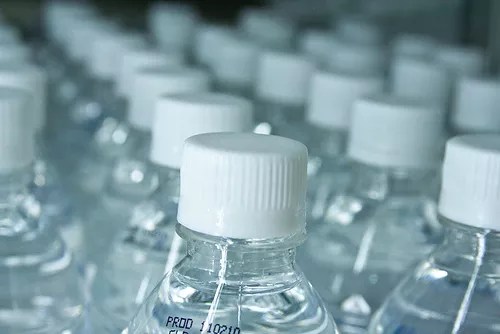
Time magazine recently published an article pointing to the perils of a water bottle habit, and that minority families are more likely to only drink bottled water.
What the article doesn’t discuss is how much plastic is wasted on water bottles, nor does it link plastic to petroleum — which is used to make plastic.
Here’s a snip from the article:
Americans quaff nearly 10 billion gallons of bottled water each year, in large part because they assume, wrongly, that it’s healthier and safer than tap water. Somewhat surprisingly, the data has suggested, underserved black and Latino families tend to spend more money than whites do on bottled water, and provide it exclusively for their kids.The study’s authors, from the department of pediatrics at the Medical College of Wisconsin, report that African American and Latino parents were three times more likely to give their children bottled water exclusively, compared with white parents. When questioned about their habits, minority parents reported that that they thought bottled water was cleaner, safer, healthier, more convenient and better tasting than tap.
In fact, the study author’s note, bottled water may be prone to bacterial contamination. A National Resources Defense Council investigation found that 17% of bottled waters had bacterial loads that were considered unsafe; 22% were tainted with enough chemicals, including arsenic, that they wouldn’t pass the strictest state standards.
What’s more, data have associated bottled water with diarrheal illness in kids: a 2010 study found that 45% of children who sought treatment for severe diarrhea drank only bottled water. And kids who use bottled water exclusively in place of tap may not get enough exposure to fluoride, which can affect their oral health. (It’s worth noting, too, that about one-quarter of all bottled waters are actually just tap water, repackaged — regardless of the pure mountain spring on the label.)
Read the entire article, by Meredith Melnick, here.
You should also check out Charlotte-Mecklenburg Utilities’ annual water quality report, just released for 2010. This link will also take you to the Spanish-language version of the same report as well as to reports from years past. To sum up: “Our drinking water meets and exceeds all state and federal drinking water standards,” the cover of the report boasts.
While that may be true, there are some substances the feds and the state don’t require the city or county to test for, and the report failed to offer an update on the reservoir expansion at the Franklin Water Treatment plant on Brookshire Boulevard in west Charlotte, which has been underway for quite some time.
Still, the point is, given our options, using a refillable stainless steel — not aluminum — bottle, and filling it from your tap is better than drinking bottled water. Even better: Use a water filter at home.
Further reading: Why recycling plastic bottles doesn’t help the problem — TreeHugger
This article appears in Jun 7-13, 2011.
Isn’t it odd that the same people who buy products made in China because they are cheaper than products made in America will spend more money per gallon for bottled water than they do for gasoline when it is available for pennies at their tap.
At a July 8, 2009 hearing before the United States House of Representatives Subcommittee on Oversight and Investigations, an FDA official testified that “the agency is aware of no major outbreaks of illness or serious safety concerns associated with bottled water in the past decade.”
At that same hearing, the Government Accountability Office (GAO) made public its report on bottled water, which found that based on a survey of water quality and health protection officials in all 50 states and the District of Columbia there was no evidence that bottled water caused any illnesses during the previous five years. (See United States Government Accountability Office Report on Bottled Water, GAO-09-610, June 2009.)
In contrast, EPA scientists and researchers have estimated that tap water consumption is the cause of over 16 million cases of acute gastrointestinal illness (vomiting/diarrhea) in the United States each year (Messner M., et al., Journal of Water and Health, 2006; 4(Suppl 2):201-40).
Great stuff, Rhiannon. Thanks for bringing this water bottle issue to light. It’s amazing that people are still buying plastic water bottles.