


About 600 refugees make their home in Charlotte each year. They become students, teachers, business owners, homeowners, consumers and taxpayers while quietly adjusting to the world they’ve arrived in. On June 20, these refugees will come together to educate and entertain Charlotte residents who want to learn more about those who have escaped persecution in their home countries to settle in Charlotte.
This year’s event, held at The Green in Uptown between the Charlotte Convention Center and the Bechtler Museum of Modern Art, will be the fourth annual event celebrating World Refugee Day in Charlotte. For 2015, however, nearly a dozen new organizations have joined the planning committee, which now consists of representatives of 16 agencies that help resettle, educate and support members of Charlotte’s refugee community. Creative Loafing sat down with two committee members who have been working to make this year’s celebration the biggest one yet. Heather Bise sits on the board of directors for ourBRIDGE, an after-school program for immigrants and refugees. Amanda Ingrassia is the director of refugee solutions for Charlotte Awake, a local faith-based organization.
Creative Loafing: What are misconceptions some natural-born citizens have about refugees?
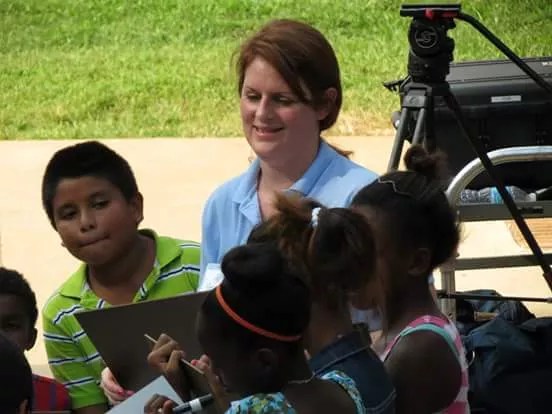
Heather Bise: I think there’s a misconception that refugees don’t work or that they’re not a part of the community. I find that people in the refugee community are the hardest working I’ve met. We have data that shows (refugees living) on Central Avenue are more likely to start a business and hire people in the community and help revitalize the area. I think the conception is that they come here and they’re just a drain. They’re really not. These kids are some of the best students. These kids are so grateful to be in school, to be receiving an education. I find them to be the most respectful and encouraging people.
What has working with this year’s planning committee been like?
Bise: This is my first year being involved with this event and I didn’t know what to expect. I think almost everybody that came to the committee this year was fairly new to the process so I felt like I had a blank slate to make it something bigger than what it’s been and everybody was enthusiastic. The way that everybody jumped in to collaborate immediately was really exciting because you don’t often see that, because different faiths are represented, different ideologies are represented, different scopes of work are represented. Everybody has their agenda, and they’re important agendas, but the fact that everybody from such a broad spectrum of services is coming together not just for the message of World Refugee Day, but also to network together, introduce each other to people who can help them, it’s really been a gratifying experience.
Ingrassia: I’ve never seen it cross this many lines. We come from very different backgrounds; Christians, Muslims, Jews, people who don’t have any religious background. We just have all these different backgrounds and I’ve never seen that type of collaboration. I feel like this is something that we’ve always wanted but it’s never happened. I feel like this is the first year where all our desires to have this actually all happen at the same time makes sense.
What can event attendees expect?
Bise: You’re going to see some wonderful cultural performances. You’re going to see some things you didn’t know we had in Charlotte.
Guests will see the different types of refugees that are coming to Charlotte. You think you know what the population is, but I think people would be very surprised to see the difference in cultures and all the different countries that are represented here.
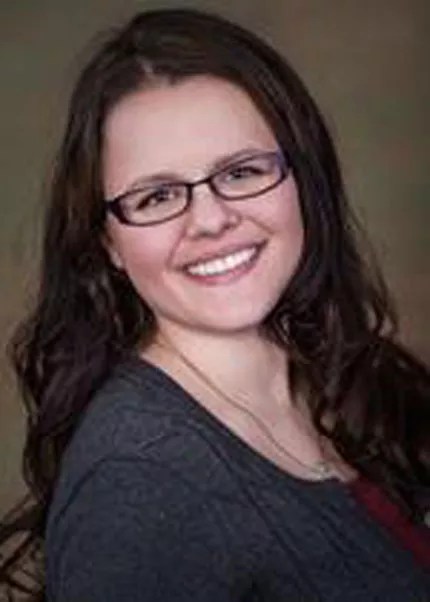
Ingrassia: I think they’ll be surprised at how much of Charlotte is engaged in this. It feels really isolated, but at the event it’s a unique way to see that it’s not isolated, that there are a lot of people who are touching this in one way or the other. They just might not realize theyre part of this big, interconnected web.
From a refugee’s standpoint, why are events like this important for them?
Ingrassia: One of their favorite things about this is that they get to share their culture. A lot of these people were kicked out of their countries because of their culture and persecuted for it. They were kicked out for ethnic reasons, so to be able to come into a public space and share what they were persecuted for is really exciting.
One refugee friend hates World Refugee Day and thought being a refugee was terrible and said, “Why woud you celebrate it?” So we’ve been having discussions and others have said, “We’ve come this far and look at what we are able to do.” They’re remembering something that was actually quite horrible and now they’re able to say, “Yes, that was horrible, but now we’re in the United States and we have a country and we want to make our country proud.”
This article appears in Jun 17-23, 2015.
Yeah. Let’s celebrate illegal immigrants day! We can fight over what new benefits to give them..
Give us your tired and hungry and poor. we’ll work our asses off to give them what we have and they can send for more relatives, too. After all, just because our ancestors worked to make this country what it is doesn’t mean we can’t give it away. We are all immigrants, the media says but this doesn’t make a distinction between those who worked to create what those who want to come and “demand their rights” want. They come here because our standard of living was created by people who worked hard to create it. Now illegals come here and demand to be given a share of that heritage. Slave owners were a relatively small part of the population and slaves wer not used in the North or the Midwest or West.
Hi Jerry,
We’re so glad you posted!
One of the primary reasons for World Refugee Day Charlotte is to help raise awareness about Charlotte’s resettled refugee population. You’re not the only person who is frustrated, and we want to help. For example, resettled refugees in Mecklenburg County (and the entire US) are here 100% legally. “Refugee” is a special kind of immigration status. All refugees are immigrants, but not all immigrants are refugees. Also, all resettled refugees have authorization to work (and that means they’re paying taxes and are pouring into the local economy by renting apartments, buying homes and cars, shopping for food, clothing, etc.). There are so many other misconceptions about this population in Charlotte. As with any group of individuals, there will be exceptions, but as a general rule, our city is much stronger because they are here. We encourage you to come out on Saturday and meet some folks for yourself! And come talk with people. We’d be happy to answer your questions and concerns.
P.S.
Here is a recent study released by UNC Chapel Hill you might find interesting!
http://www.kenan-flagler.unc.edu/~/media/Files/kenaninstitute/ImmigrantEconomicImpact.pdf
This article does a great disservice to those coming here LEGALLY from war torn countries with refugee status and trying to relabel ILLEGALS as “refugees”.
I am not going to buy into it.